

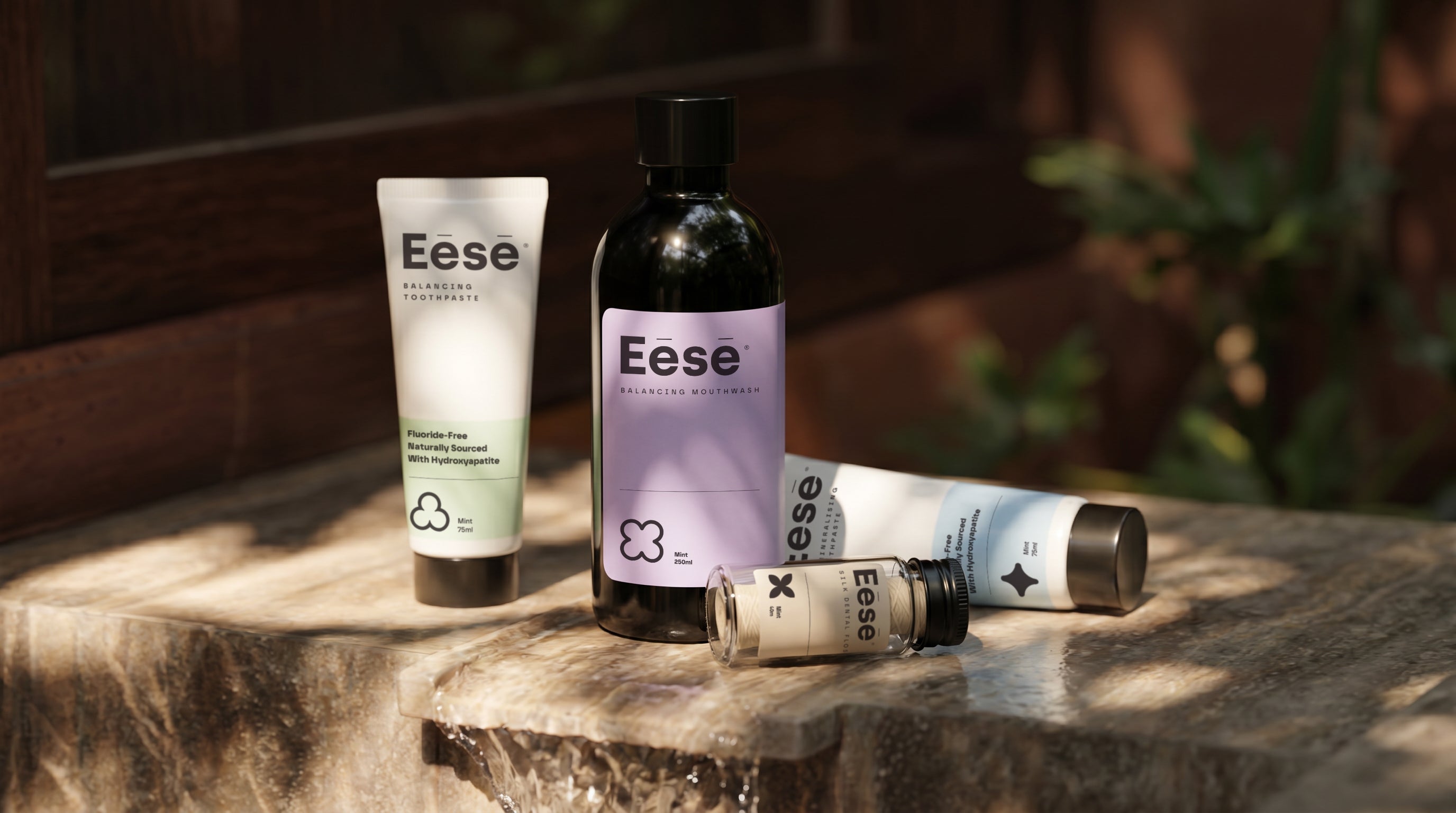
The Hidden Cost of Common Oral Care Ingredients
Most of us have brushed our teeth with the same products our whole lives without ever reading the label. Fair enough, it's not the most exciting read. But a few of those ingredients are worth understanding properly, especially because there's genuine, published research showing new options exist that do the job just as well, sometimes better.
Here's what the science actually says about the most common ingredients in mainstream oral care, and why you deserve better.
Sodium Lauryl Sulfate (SLS): the foam you don't need
SLS is the ingredient responsible for that thick, foamy lather you get when you brush. While a little of foam is highly useful for distributing the toothpaste across your teeth and breaking up biofilm, it shouldn’t be an overwhelming amount that spills out of your mouth. More importantly, it shouldn’t be damaging to your gums - which unfortunately is the case for SLS.
What the research on SLS actually shows:
-
A review of scientific studies found that SLS use has been linked to mucosal desquamation (the peeling of the mouth's lining), irritation and inflammation of the oral tissue, and slows healing of existing lesions [1].
-
Multiple clinical trials have specifically examined SLS's role in canker sores, with the conclusion that switching to an SLS-free toothpaste reduced their frequency, duration, and pain [2,3].
-
What scientists think is behind this: SLS strips the thin mucin layer that normally protects the inside of your mouth, leaving it more exposed to irritation [1,2].
If you're prone to canker sores, a dry mouth, or general sensitivity, this is one of the more evidence-backed reasons to switch.
[IMAGE: side-by-side visual comparing foamy toothpaste vs. a low-foam natural alternative]
Fluoride: effective, but not the only option
Fluoride is genuinely a contested topic, and you deserve an honest answer.
-
Fluoride is one of the most studied ingredients in preventive dentistry, and major health bodies still recommend it for cavity prevention [4]. It’s also added to drinking tap water in most developed regions, including parts of the UK.
-
The concern is that there’s a fine line between an effective fluoride dose and a dangerous one, particularly for young children.
-
Ingesting more than a pea-sized amount regularly during tooth development can contribute to dental fluorosis, leading to discolouration of the enamel [5,6].
-
A recent review of current literature observed that excessive fluoride intake can damage brain cells, harm their energy systems, and disrupt normal cell processes, which can lead to memory and thinking problems [21].
For these reasons, many dental researchers are looking toward hydroxyapatite instead, It has now been shown to perform equivalently to fluoride toothpaste for caries prevention and remineralisation, without needing any ‘do not swallow’ warnings on the tube [7,8]. We cover this in more details in our piece on hero ingredients.
Alcohol in mouthwash: pushing the big red button
When it comes to the oral microbiome (covered in our previous blog post), alcohol has an all-or-nothing approach. Just like those hand sanitisers promising to ‘kill 99.9% of germs’, an alcohol-based mouthwash destroys bacteria indiscriminately - including the good ones that protect you and keep your gums happy and breath fresh. But the story doesn’t stop there.
-
Alcohol's drying and irritating effect on oral tissue is well documented and, combined with the microbiome disruption mentioned above, is reason enough for us to formulate without it [9,11].
-
Alcohol metabolises into acetaldehyde, a compound with recognised carcinogenic potential, and some studies have found this process can occur in the mouth after using alcohol-based rinses [9].
-
A systematic review pooling data from over 43,000 participants found that a few studies identified a link between frequent alcohol mouthwash use and oral cancer risk, particularly at high frequency (three or more uses per day) [9,10].
A dry mouth isn't a minor side effect either. Saliva is one of your main defences against tooth decay and gum disease, so anything that regularly dries out your mouth is working against your own biology [12].
Whitening agents and titanium dioxide
Titanium dioxide is used as a whitening agent in some toothpastes (listed as CI 77891 or E171). Its safety profile has been officially challenged in the last few years:
-
The European Food Safety Authority concluded in 2021 that it could no longer rule out genotoxicity concerns for titanium dioxide as a food additive [13].
-
The EU subsequently banned E171 in food from August 2022 [14].
-
This ban applies specifically to food, and regulators are split: the US FDA has maintained its GRAS (Generally Recognised As Safe) classification, while the EU took the more precautionary route [13,15].
Given that we use toothpaste daily and it’s inevitable to swallow at least some of it, we think being cautious makes perfect sense - especially because natural whitening is easier than you think.
Parabens: the preservatives under review
Parabens (methylparaben, propylparaben, and others) are common preservatives that extend shelf life of products.
-
Some, at certain concentrations, are suspected endocrine disruptors, meaning they can potentially interfere with hormone signalling in the body [16].
-
The EU has already banned several parabens from several products designed for children under three [16,17].
-
Strict concentration limits apply to the parabens that are still permitted in cosmetics [16,17].
Knowing that safer, effective natural preservatives exist, and not wanting to play around with our hormones, we made sure all Eēsē products are paraben-free.
Artificial colours and flavours
These are added purely for appearance and taste, which could simply be achieved in a natural way. And who said we need blue-and-red striped toothpaste anyway?
A few things worth knowing:
-
"Flavour" and "natural flavour" on a label are often catch-all terms that can represent complex, undisclosed artificial blends.
-
If you have a sensitive mouth, or simply want to know exactly what you're putting in it, transparency here matters more than most people realise.
[IMAGE: clean flat-lay of natural colourants — beetroot powder, activated charcoal, mint leaves — next to a bottle of synthetic food dye, contrast style]
Chlorhexidine: when medicine is used in the wrong context
Chlorhexidine deserves a category of its own because it isn't a cosmetic ingredient, it's a medicated antiseptic.
-
Dental guidelines are clear that it should be used short-term (typically 2-4 weeks) under professional guidance for specific conditions, not as an everyday rinse [18].
-
It's a broad-spectrum antibacterial, meaning it doesn't distinguish between harmful bacteria and the beneficial, nitrate-reducing species your body relies on for healthy blood pressure regulation.
-
Studies have found measurable drops in nitric oxide availability, alongside a shift in blood pressure, within a week of daily use [18,19,20].
For everyday, ongoing oral care, it's simply the wrong tool for the job. We'd rather support your microbiome every day than sterilise it and have to start from scratch.
What "clean" oral care actually means
These ingredients are in mainstream products because they're cheap, effective at quick fixes, and have decades of manufacturing infrastructure behind them. But research increasingly shows that gentler alternatives exist that support your whole mouth rather than just fighting symptoms in isolation.
That's the thinking behind every Eēsē formulation: 100% naturally sourced options, zero unnecessary additives, ingredients chosen for a clear reason. Everything you need, without anything you don’t.
See what's actually in the Eēsē routine →
References
-
Kasi SG, et al. Side effects of sodium lauryl sulfate applied in toothpastes: A scoping review. Am J Dent. 2022.
-
Shim YJ, Choi JH, Ahn HJ, Kwon JS. Effect of sodium lauryl sulfate on recurrent aphthous stomatitis: A randomized controlled clinical trial. Oral Dis. 2012;18:655-660.
-
Herlofson BB, Barkvoll P. Sodium lauryl sulfate and recurrent aphthous ulcers. Acta Odontol Scand. 1994.
-
World Health Organization. WHO guidance on fluoride use in oral health.
-
American Dental Association. Fluoride toothpaste use for young children. JADA. 2014.
-
Wright JT, et al. Fluoride toothpaste efficacy and safety in children younger than 6 years: A systematic review. JADA. 2014.
-
Schlagenhauf U, et al. Caries-preventing effect of a hydroxyapatite-toothpaste in adults: an 18-month double-blinded randomized clinical trial. Front Public Health. 2023.
-
Amaechi BT, et al. Comparative efficacy of a hydroxyapatite and a fluoride toothpaste for prevention and remineralization of dental caries in children. BDJ Open. 2019.
-
Rivera C, Venegas B. Alcohol-based mouthwash as a risk factor of oral cancer: A systematic review. Med Oral Patol Oral Cir Bucal. 2020;25(1):e1-e12.
-
Evidence-Based Dentistry. Does the use of alcohol mouthwash increase the risk of developing oral cancer? Nature (Evid Based Dent). 2022.
-
La Vecchia C. Mouthwash and oral cancer risk: an update. Oral Oncology, cited within systematic review analyses.
-
Dodds MW, et al. Saliva: A review of its role in maintaining oral health and preventing dental disease. BDJ Team. 2015.
-
European Food Safety Authority (EFSA). Opinion on the re-evaluation of titanium dioxide (E171) as a food additive. 2021.
-
European Commission. Goodbye E171: The EU bans titanium dioxide as a food additive. 2022.
-
US Right to Know. Titanium Dioxide, banned in Europe, remains a common US food additive. 2025.
-
European Commission Scientific Committee on Consumer Safety (SCCS). Opinions on parabens, 2010–2021.
-
EU Regulation. Restrictions on propylparaben and butylparaben in children's leave-on products, effective April 2015.
-
Bescos R, et al. Effects of Chlorhexidine Mouthwash on the Oral Microbiome. Scientific Reports. 2020;10:5254.
-
Cabral Pinto MFM, et al. Evaluation of the Effect of Chlorhexidine Mouthwash on Blood Pressure: A Narrative Literature Review. Scientific Letters. 2025.
-
Bondonno CP, et al. Antibacterial Mouthwash Blunts Oral Nitrate Reduction and Increases Blood Pressure in Treated Hypertensive Men and Women. Am J Hypertens. 2015;28:572-575.
-
Borges MS, Freitas RDS, Martins BAA, Silva FRD, Garcia ALH, Silva JD. Fluoride and the brain: A systematic review of neurotoxicity and developmental risks. Genet Mol Biol. 2026 May 15;49Suppl 1(Suppl 1):e20250204. doi: 10.1590/1678-4685-GMB-2025-0204. PMID: 42139068; PMCID: PMC13178735.
This article is intended for general educational purposes and is not medical advice. Fluoride and chlorhexidine remain recommended by dental professionals in specific circumstances; please speak with your dentist about what's right for you or your child.

